LED vs Laser Devices - The Truth About At-Home Masks

You’ve probably seen the ads: A premium “clinical-grade laser” mask declaring that LED light therapy is outdated, and that only lasers deliver real results, conveniently, at a four-figure price. It’s a great way to justify a markup. It’s just NOT what the research shows.

Let’s be precise about where the hype actually lives. The laser is real - we sell one, and we’ll defend the technology all day. The buzzword is the word “clinical-grade.” When a brand stamps it on a mask you wear alone on your couch, that’s marketing borrowing a doctor’s-office word it hasn’t earned. We’re not knocking laser technology. We’re knocking the claim.

Here’s the honest version, and it’s more useful than the hype: LED and Laser are both real, studied, effective forms of light therapy. At the same wavelength and the same dose, the published evidence does not show one is reliably better than the other. The smartest devices don’t pick a side - they use each where it does its best work. That’s how NuYOU360 is built.

Comparison chart of LED masks, VCSEL laser masks, and clinical lasers for light therapy masks.

So What is the Difference?

One real, specific thing: depth. A laser’s light is more concentrated and directed, so at a given wavelength it can penetrate a bit deeper and more consistently into tissue. That’s a genuine advantage - in the right place.

But deeper is not better everywhere on your face. Light therapy follows what’s called a biphasic dose response: the right dose helps, too little does nothing, and more is not automatically better. Different areas of your face want different things.
Broad, even coverage is ideal across the cheeks and forehead. Concentrated, deeper delivery is ideal in structural zones like the jawline. Blanketing your whole face in maximum-depth light isn’t ‘more advanced’ - it’s just imprecise.

Why NuYOU360 Uses Both by Design

This is the part the “LED is Dead” brands skip. In real devices, Laser and LED aren’t rivals. They complement each other. Most “Laser” masks still rely on LEDs for broad coverage because that’s what LEDs do best.

LED/VCSEL Laser Masks

True Clinical Lasers

Safety

Designed for Home Use

Only Professional Use

Coverage

Full-Face Wide Coverage

Targeted Spots

Heat Risk

Minimal

Higher

Routine Use

Frequent

Controlled, Limited Sessions

Purpose

Cosmetic + Wellness Support

Medical Procedures

Key Takeaway

At-home masks must operate within consumer-safe energy limits - regardless of whether they are marketed as LED or laser.

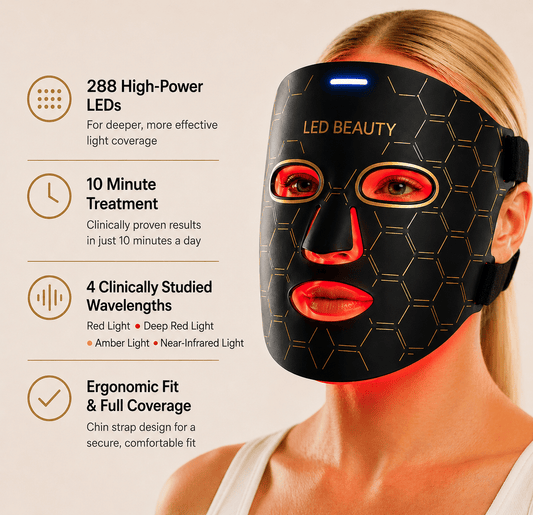
Facial mask with LED lights distributed across a person's face, highlighting features and benefits.

Right Light, Right Zone, Right Dose

That’s why our Contour PRO VCSEL Laser Deep-NIR pairs broad LED coverage across the face with concentrated 1064nm VCSEL laser delivery along the jawline, and why our RADIANCE and Contour PRO LED versions deliver beautiful, studied results on their own. You’re not choosing the ‘dead’ technology or the ‘superior’ one. You’re choosing the right tool for what you want.

Get Your Glow
Person receiving red light therapy on their face with a red light device.

But it’s a Laser - Is That Safe at Home?

Yes, and this is where the premium “clinical laser” marketing gets slippery. Lasers are classified by power. The high-powered clinical lasers in a dermatologist’s office can resurface or burn skin, which is exactly why the law keeps them in a controlled room with a trained operator and eye protection. A mask you wear at home is engineered to a low-emission, home-use class, deliberately gentler, specifically so you can safely use it yourself, unsupervised. Same technology family. A device safe to wear alone on your couch is, by definition, not a clinical laser machine no matter what the $1000+ price tag implies.

That’s the real buzzword, named plainly: “clinical-grade.” It’s a doctor’s-office word doing duty in a living-room product. The laser is genuine; the “clinical” framing is the marketing. We’ll always tell you which is which.

 image of NAsa's research into red and Near infrared light therapy for cell energy

Wavelength Advantage

NuYOU360™ uses clinically respected cosmetic & wellness LED ranges that are widely studied for cellular interaction and skin appearance support:

  • Red Light (~620–660 nm)
    Supports skin appearance, texture, and collagen-support routines.*
  • Near-Infrared (~800–850 nm)
    Supports deeper tissue comfort and overall wellness support.*
  • Blue Light (~405–470 nm)
    Commonly used to support clearer-looking skin and blemish-prone routines.*

These wavelengths are popular in modern at-home light therapy because they’re:
✅ effective for routine use
✅ gentle enough for consistency
✅ widely used in cosmetic-grade devices

Even NASA-level research has explored red and near-infrared light for tissue support and cellular response benefits - reinforcing that LED light therapy is a serious, respected modality.

Woman holding a facial device with text about light therapy benefits on a beige background

The NuYOU360 Standard

We won’t tell you LED is dead to sell you a Laser. We won’t tell you Laser is hype to sell you LED. We’ll tell you what the science says, name every wavelength, show you our verified specs, and let you choose the device that fits your skin and your life. Consistency beats intensity. Honesty beats hype. Every time.

Explore Our LED/VCSEL Laser Masks
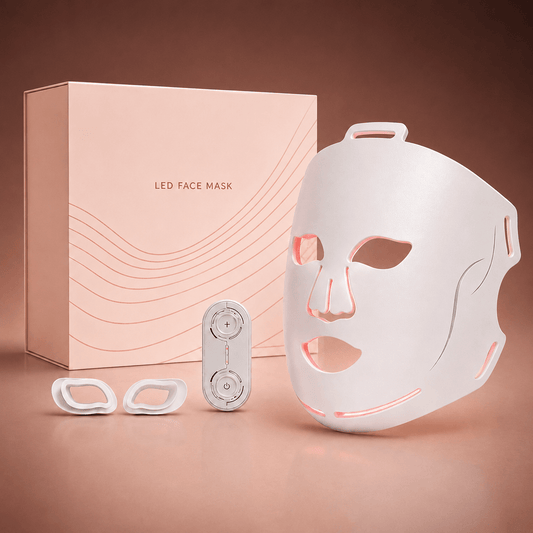
Person wearing a LED face mask in a bathroom setting

Our Philosophy: Honest Science Over Hype

You’ll always see the market chasing the next “shock value” trend.

NuYOU360™ builds differently.

We are committed to:

✅ Science-backed wavelength ranges

✅ Transparent, compliant messaging

✅ Safe delivery for real-life use

✅ Results that build consistently over time

Because the best beauty technology isn’t the loudest-it’s the one you can trust.

Explore Our LED/VCSEL Laser Masks

NuYOU360™ Mission

We built NuYOU360™ for real women - women juggling careers, families, changing hormones, and never enough time. Both LED & VCSEL Laser light therapy combined offer a powerful ritual you can actually keep - quick, safe, relaxing, and designed for everyday life.

Safety + Compliance Note

NuYOU360 devices use LED and VCSEL (Vertical-Cavity Surface-Emitting Laser) emitter technology engineered to a low-emission, home-use class for unsupervised consumer use; they are not high-powered clinical or aesthetic laser devices. Comparisons of light-therapy modalities reflect general findings in published photobiomodulation literature and are provided for educational purposes. Results may vary. These statements and products are not intended to diagnose, treat, cure, or prevent any disease. Consult a qualified healthcare professional before beginning any light therapy routine, particularly if you have a photosensitive condition or take photosensitizing medication.

Frequently Asked Questions

Laser vs LED FAQ — Quick, Honest Answers

Are “laser masks” real?

Yes, some consumer masks may include laser-based components (such as laser diodes or VCSEL-type emitters).

However, wearable masks must still operate within consumer-safe energy levels, so they are not the same as professional clinical lasers used in dermatology offices.

Does laser penetrate deeper than LED?

Laser light can be more concentrated and directional, which may allow deeper penetration in certain clinical settings.

But for home-use facial masks, what determines outcomes is not penetration hype it’s:

  • wavelength accuracy
  • safe energy delivery
  • full-face coverage
  • routine consistency

Takeaway: deeper doesn’t always mean better - especially for cosmetic, full-face wellness goals.

Is LED going to become irrelevant?

No! LED remains the dominant standard in at-home light therapy because it is:

✅ safe for frequent routine use
✅ comfortable and non-invasive
✅ ideal for full-face even coverage
✅ supported by decades of consumer-grade light therapy adoption

Takeaway: LED is not going away - it’s still the foundation.

Should I avoid LED masks because some brands say lasers are “the future”?

No.That messaging is designed to trigger urgency and fear - not informed buying decisions.

A well-designed LED mask using clinically respected wavelengths can be highly effective, especially because results come from consistent exposure over time, not aggressive intensity.

Takeaway: the best mask is the one you can safely use consistently - that’s how results build.

Are clinical lasers better than LED masks?

Clinical lasers can be powerful but they’re designed for:

  • targeted procedures
  • medical-grade intensity
  • professional supervision
  • limited sessions

At-home masks are designed for:

  • full-face routine use
  • comfort
  • safety
  • consistent long-term benefits

Takeaway: they’re not competitors, they serve different purposes.

What should I look for in a high-quality light therapy mask?

Ignore hype. Look for these performance pillars:

Wavelength ranges (red + near-infrared are the core)
Coverage consistency (full-face treatment matters)
Comfort + routine usability (results require repetition)
Safe energy delivery (designed for home use)
Brand transparency (avoid exaggerated claims)

Takeaway: the best technology is the one engineered for real life.

Can a “laser mask” replace LED?

Not realistically. Lasers and LED can coexist but LED is still the most practical technology for:

  • full-face at-home coverage
  • consistent routines
  • wide consumer usability

Even brands with “laser” messaging often combine it with LED because LED is still essential for broad, even coverage.

Takeaway: laser doesn’t replace LED, it typically supplements it.